Imagine walking down a quiet path lined with trees. The rustle of leaves whispers with the breeze, birds dart in and out of branches, and dappled sunlight filters onto the ground. Standing tall and rooted, trees are more than just part of the landscape—they are guardians, storytellers, and living witnesses to time.
A tree walk is not just a stroll; it’s an invitation to pause, observe, and connect with these giants of the natural world. Each tree holds a history in its rings, a community in its branches, and a role in the ecosystem. Observing them mindfully transforms an ordinary walk into a journey of discovery and reflection.
Why Trees Matter
Trees are the lungs of our planet, but their importance goes far beyond oxygen.
- Environmental role: They filter air, provide shade, reduce heat, and prevent soil erosion.
- Biodiversity hubs: Trees shelter countless species—birds, insects, fungi, and small mammals.
- Cultural significance: In India, trees like the Peepal, Banyan, and Neem hold deep spiritual and medicinal value.
- Mental health benefits: Spending time among trees lowers stress, improves focus, and fosters calm.
Walking among trees is, in many ways, a reminder of interconnection—we depend on them, and they silently sustain us.
How to Begin a Tree Walk
A tree walk can be as simple as a slow stroll in your neighborhood park or as immersive as joining a guided walk in a forest.
- Choose your location: Urban parks, botanical gardens, university campuses, sacred groves, or rural trails all work beautifully.
- Walk slowly: This is not about distance but about depth. Pause at each tree, notice its features.
- Observe details:
- Leaf shape and texture
- Bark color and patterns
- Flowers, fruits, or seeds
- The wildlife it hosts
- Carry tools: A notebook, camera, and maybe a tree guidebook or app (PlantSnap or Seek) for identification.
Fascinating Trees to Observe in India
India’s diversity of landscapes makes tree walks endlessly rewarding. Some iconic species to look out for:
- Banyan (Ficus benghalensis): With aerial roots and sprawling canopies, it feels like walking under a living cathedral.
- Peepal (Ficus religiosa): Sacred in Indian culture, with heart-shaped leaves that dance in the slightest breeze.
- Neem (Azadirachta indica): Known for its medicinal properties, its bitter leaves tell stories of healing.
- Gulmohar (Delonix regia): Bursts of fiery red-orange flowers mark summer landscapes.
- Amaltas (Cassia fistula): Cascading golden blossoms make spring unforgettable.
- Mango (Mangifera indica): The “king of fruits” tree, offering shade, blossoms, and bounty.
- Sal and Teak: Found in central Indian forests, valued for their strength and presence.
Activities During a Tree Walk
- Leaf journal: Collect fallen leaves (never pluck) and note their shapes.
- Bark rubbings: Place paper on bark and rub with a pencil to reveal patterns.
- Seed hunt: Observe how different trees disperse seeds—winged samaras, fluffy cotton, or sturdy nuts.
- Photography: Capture textures, branching patterns, or the play of light.
- Silent sitting: Spend 10 minutes under a tree, simply noticing sounds, smells, and sensations.
Lessons Trees Teach Us
Observing trees closely reveals life lessons:
- Patience: Trees grow slowly yet steadily, reminding us that growth takes time.
- Resilience: Even after storms or pruning, they continue to thrive.
- Generosity: They provide shade, fruits, shelter, and oxygen without asking in return.
- Community: Trees support each other underground through root systems and fungal networks, showing us the power of cooperation.
Tree Walks with Children
For children, tree walks can be magical explorations.
- Play “tree detective”—ask them to identify trees by leaves or bark.
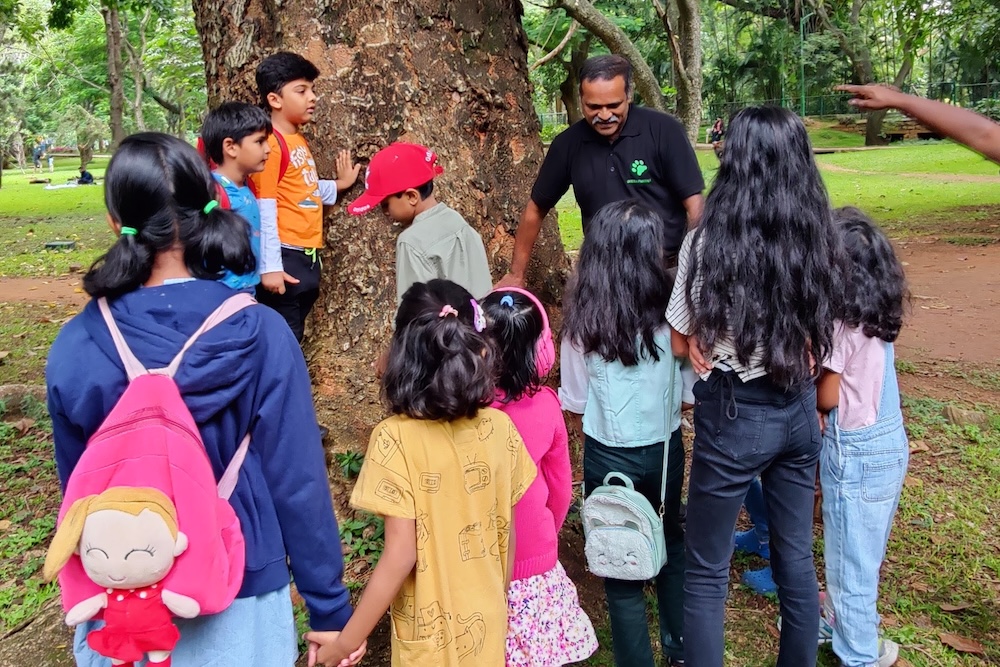
- Encourage them to hug trees and describe how they feel—rough, smooth, warm, or cool.
- Start a seasonal diary—noting when flowers bloom, fruits ripen, or leaves fall.
- Share folk tales and myths about trees, like the Kalpavriksha (wish-fulfilling tree) or the Bodhi Tree.
Such activities nurture not only knowledge but also a lifelong bond with nature.
Seasonal Connections in India
Trees mark the rhythm of Indian seasons beautifully:
- Spring (Feb–Apr): Amaltas and Silk Cotton bloom in vibrant colors.
- Summer (May–Jun): Gulmohar sets landscapes aflame, and Mango trees bear fruit.
- Monsoon (Jul–Sep): Banyans and Peepals thrive, with lush green canopies.
- Autumn (Oct–Nov): Deciduous trees shed leaves, painting the ground golden.
- Winter (Dec–Jan): Flowering trees like Indian Coral Tree add color to bare landscapes.
Respectful Observation
While observing trees, it’s important to approach with respect:
- Never carve into bark or pluck flowers.
- Avoid disturbing nesting birds or insects.
- Pick only fallen leaves, seeds, or flowers.
- Remember, trees are living beings—observe, don’t exploit.
Practical Tips for Beginners
- Wear comfortable walking shoes and carry water.
- Go early in the morning or late afternoon for pleasant light and cooler weather.
- Join local groups—many cities have nature clubs that conduct guided tree walks.
- Carry a field guide for Indian trees, or use apps for instant ID.
- Be consistent—observe the same tree across seasons to notice subtle changes.
Closing Reflection
Every tree you pass has a story to tell. Some have stood for decades, others for centuries, silently witnessing the flow of life—festivals, storms, children playing under their shade. When we pause and observe, trees cease to be background scenery; they become companions and teachers.
A tree walk is not just about identifying species—it’s about building a relationship. By touching bark, listening to leaves, and noticing the life they hold, we step into a timeless dialogue between humans and trees.
So next time you walk past a tree, don’t just hurry by. Stop. Place your hand on its trunk. Listen. You may discover wisdom older than history, shared by Earth’s gentle giants.